

Digital product passports for construction.
Material Index offers manufacturers a way of reaching DPP compliance that also helps them connect better with building owners and contractors. Using our AI enrichment technology we can verify images and information to develop a securely hosted DPP.
What is a digital product passport (DPP)?
A digital product passport (DPP) is a product-specific digital record, required under EU law and reached by scanning a code on the product itself. For construction products the obligation arrives family by family, with the first families expected around 2029. Material Index is building the service to host them, on the audit platform behind over 250 audits across the UK, supporting manufacturers not only to become compliant but to take an active part in the Circular Economy.
For a construction product, a DPP holds the paperwork a manufacturer already produces: the Declaration of Performance and Conformity, instructions for use, safety information and certificates. It adds environmental data and an identification code.
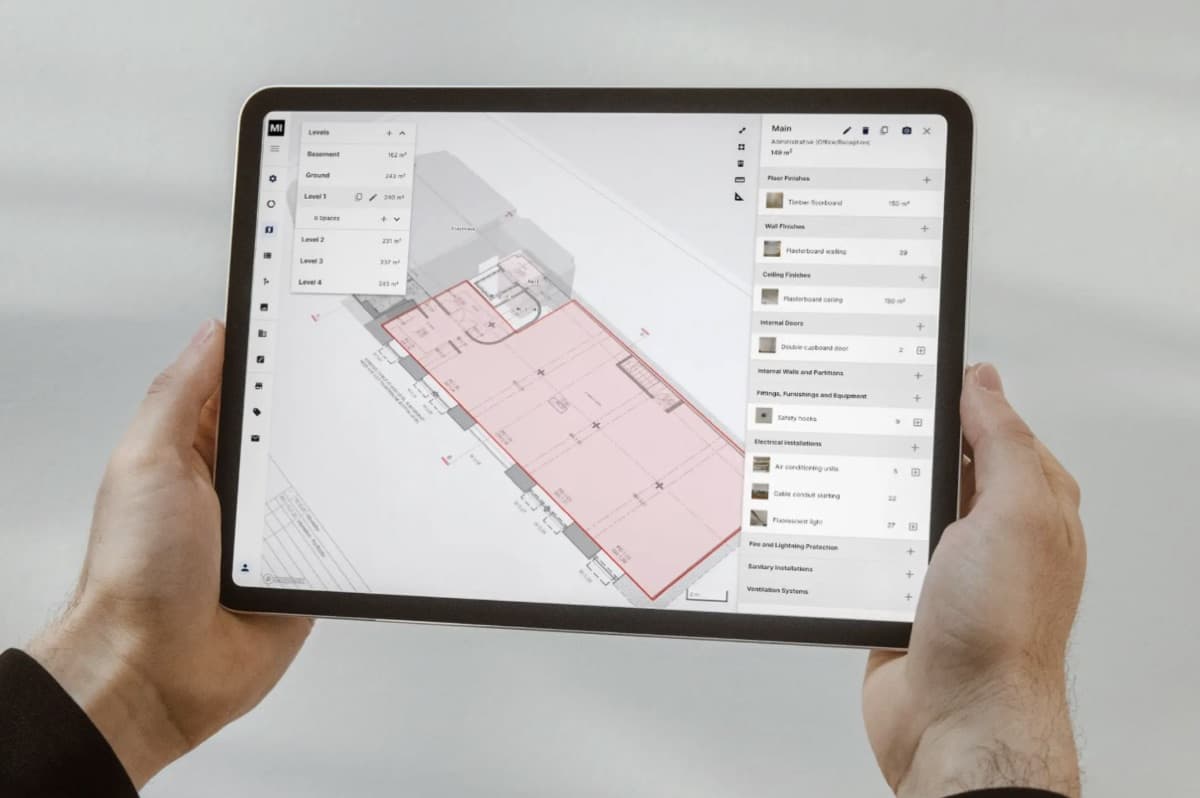
How Material Index supports your DPP.
Material Index is building towards the role of a DPP service provider: under ESPR Article 2(32), an independent third party, authorised by the manufacturer, that hosts passport data and makes it available to those with a right of access.
- Your declarations, our custody. You remain the author of every legal declaration. We hold your documents with their provenance and serve them to the right audience.
- Built to the standards. We are designing against the six cited EN 1821x standards, covering identifiers, data carriers, storage, data exchange and APIs.
- A backup provider. The registry names a backup host, so your passports stay reachable if any provider, including us, stops trading.

Talk to us about DPP readiness.
Who is affected?
Economic operators placing in-scope products on the EU market: manufacturers and importers, including non-EU companies that export to the EU.
Product categories and timelines are evolving. Exact requirements and dates will be set by the European Commission.
Why start before it is mandatory.
Material Index runs Pre-Demolition Audits (PDA) across the UK, so we can see where your products are installed and when they come out, which few DPP providers can. When an auditor matches your product on site, your verified data replaces their estimates, feeds the Material Passport, and supports resale through the Material Index marketplace and its 300+ Trade Partners.
Deconstruction alerts
Planned: notice when your product is being removed from an audited building, ahead of refurbishment, when designers and contractors are choosing what to specify.
Take-back
Planned: publish a take-back scheme and it appears as a Pathway in the Asset Register of every audited building that holds your product.
Certificate tracking
Your EPDs and factory production control certificates stored in one place, with a warning before they lapse.
A passport for tenders
A downloadable passport PDF to answer client and planning requirements now, before the law asks for one.
In more detail.
Which laws require a DPP?
Two EU regulations share the same infrastructure.
- ESPR, the Ecodesign for Sustainable Products Regulation (EU) 2024/1781 (opens in new tab), defines what a DPP is and how identifiers, carriers and the registry work. Materials such as iron, steel and aluminium sit on this track.
- CPR, the Construction Products Regulation (EU) 2024/3110 (opens in new tab), creates the construction DPP at Articles 75 to 77 and the Declaration of Performance and Conformity at Annex V.
Both use one EU registry, set up by Implementing Regulation (EU) 2026/1778, and the same EN 1821x harmonised standards.
When will construction products need a DPP?
| Date | What happens |
|---|---|
| 15 July 2026 | Six EN 1821x DPP standards cited in the Official Journal |
| 20 July 2026 | EU DPP Registry goes live |
| Around Q2 2027 | CPR Article 75 delegated act expected, defining the construction DPP |
| Roughly 18 months later | Obligations begin, one product family at a time |
| Around 2029 | First families, such as structural metal and masonry ancillaries |
| 2030 onwards | Most other families, including sanitary appliances |
Until then, the duty is to supply your Declaration of Performance and Conformity electronically. Steel and aluminium producers may face earlier obligations under ESPR, from the second half of 2028 at the earliest.
What goes into a construction DPP?
Mostly documents you already hold. The final field list will be set by the Article 75 delegated act, but it will be built around:
- Declaration of Performance and Conformity (DoPC). The successor to the DoP: the same performance table, plus environmental characteristics such as carbon footprint, and a statement that the product meets the requirements that apply to it.
- Product information. Technical datasheets, instructions for use and safety information.
- Identifiers. A unique product identifier at model, batch or item level, using a scheme permitted by EN 18219, such as GS1 Digital Link or IEC 61406.
Once a code is printed or etched onto a product, it cannot change. A code etched into a stainless steel bracket is expected to last the life of the building, so the identifier needs to be right before it goes on.